medical weight loss Somerset NJ
Losing weight can be frustrating, especially when you’ve tried diets, exercise programs, calorie tracking, or other approaches without achieving results you can maintain. For some people, weight management involves more than simply eating less or exercising more.
Medical weight loss is a healthcare-supervised approach to weight management that considers your health history, weight-related risks, lifestyle, nutrition, physical activity, and, when appropriate, prescription weight-loss medications. The goal isn’t simply to make the number on the scale decrease—it is to develop an individualized strategy that supports healthier, sustainable weight management. The National Institute of Diabetes and Digestive and Kidney Diseases (NIDDK) explains that treatment for overweight and obesity may involve lifestyle changes, weight-loss medications, or other approaches depending on an individual’s health and needs.
At Peak Wellness Center in Somerset, NJ, medical weight management begins with evaluating the person rather than automatically recommending the same program or medication to everyone.
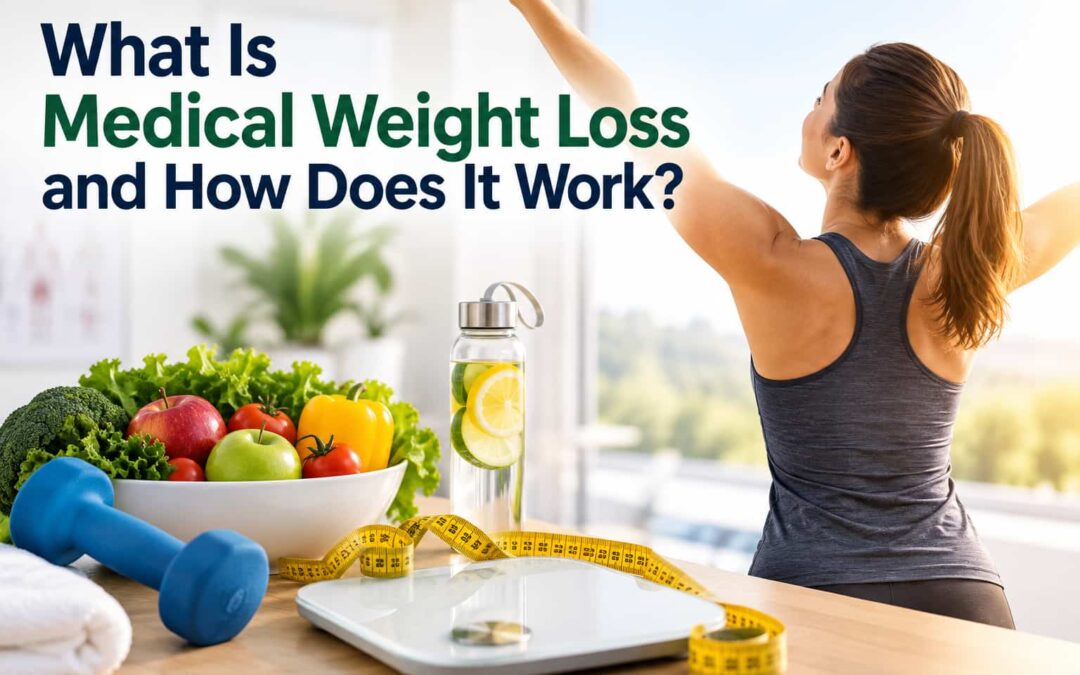
What Is Medical Weight Loss?
Medical weight loss refers to weight management performed under the supervision of qualified healthcare professionals.
Unlike a commercial diet program, the process can include a medical evaluation and consideration of factors that may influence a person’s ability to lose or maintain weight.
These may include:
- Current weight and weight history
- Body mass index (BMI)
- Medical conditions
- Current medications
- Previous weight-loss attempts
- Eating patterns
- Physical activity
- Sleep habits
- Lifestyle
- Weight-related health risks
- Individual goals
Depending on the patient and provider’s evaluation, treatment may involve lifestyle modifications, nutrition and activity recommendations, ongoing monitoring, and prescription weight-management medication when medically appropriate.
The important distinction is that medical weight loss should be individualized.
Two people who both want to lose 40 pounds may have very different medical histories, challenges, risks, and treatment needs.
Medical Weight Loss vs. Dieting: What’s the Difference?
Many people assume medical weight loss is simply another diet.
It isn’t necessarily.
A traditional diet typically focuses primarily on changing what or how much someone eats.
Medical weight management takes a broader approach.
| Traditional Diet Approach | Medical Weight Management |
|---|---|
| Primarily focuses on food/calories | Considers broader health and weight factors |
| Often self-directed | Supervised by healthcare professionals |
| Usually follows a predetermined program | Can be individualized |
| May focus heavily on scale weight | Can consider health, behaviors and function |
| Usually doesn’t include prescription treatment | Medication may be considered when appropriate |
| Limited medical monitoring | Ongoing medical monitoring may be incorporated |
This doesn’t mean healthy eating and physical activity aren’t important.
They remain fundamental components of weight management.
Medical supervision simply adds another layer: understanding the patient’s health and determining which strategies are appropriate for that individual.
Who May Be a Candidate for Medical Weight Management?
Not everyone who wants to lose a few pounds necessarily needs medical weight management.
Eligibility for specific treatments—including prescription weight-loss medications—depends on individual medical circumstances.
A healthcare professional may consider:
- BMI
- Weight-related medical conditions
- Previous weight-loss attempts
- Medical history
- Current medications
- Potential contraindications
- Treatment risks and benefits
- Personal weight-management goals
This is one reason an evaluation should come before deciding which medication or program you want.
A medication that is appropriate for one person may not be appropriate for another.
How Does a Medical Weight Loss Program Work?
The exact process varies according to the patient and the services offered, but medical weight management can generally be understood as several steps.
Step 1: Medical Evaluation
The first step is understanding your current health and weight history.
Your provider may ask:
- How long have you struggled with your weight?
- What approaches have you previously tried?
- How much weight did you lose?
- Did you regain it?
- What medications are you currently taking?
- Do you have weight-related medical conditions?
- What does your typical eating pattern look like?
- How physically active are you?
- How well do you sleep?
- What are your goals?
These questions help identify factors that may influence treatment.
Step 2: Establish Realistic Goals
Many patients arrive with a specific number in mind.
For example:
“I want to lose 50 pounds.”
That goal can be discussed, but successful medical weight management shouldn’t focus exclusively on reaching one number.
Other meaningful goals may include:
- Improving eating habits
- Becoming more physically active
- Improving mobility
- Increasing strength
- Reducing waist circumference
- Improving certain weight-related health measures
- Feeling more comfortable performing everyday activities
- Developing habits that can be maintained long term
The question shouldn’t simply be:
“How quickly can I lose weight?”
A better question is:
“How can I lose weight safely while building a strategy I can maintain?”
Step 3: Determine Whether Medication Is Appropriate
Prescription weight-management medications have become an important treatment option for eligible patients.
However, medical weight loss does not automatically mean medication.
A qualified healthcare provider should determine whether medication is appropriate based on the patient’s individual circumstances.
Factors may include:
- Medical history
- BMI
- Weight-related conditions
- Current medications
- Potential drug interactions
- Contraindications
- Previous treatments
- Potential benefits
- Potential side effects and risks
If medication is appropriate, it should be considered part of a broader weight-management strategy rather than a replacement for healthy behaviors.
What Are GLP-1 Weight-Loss Medications?
GLP-1 medications have changed the conversation around medical weight management.
GLP-1 stands for glucagon-like peptide-1, a naturally occurring hormone involved in processes including appetite regulation and blood sugar control.
Certain prescription medications act on GLP-1 pathways and can help eligible patients manage weight by influencing appetite and feelings of fullness.
Some newer medications affect more than one hormone pathway.
Two names patients commonly hear are:
Semaglutide
Semaglutide belongs to the GLP-1 receptor agonist class. Different semaglutide products have different FDA-approved indications, which is why the specific medication and reason for prescribing it matter.
Tirzepatide
Tirzepatide works through both GIP and GLP-1 receptor pathways. As with any prescription weight-management medication, eligibility and appropriateness should be determined by a healthcare professional.
These medications can be powerful tools for appropriate patients.
But they aren’t magic injections—and they aren’t appropriate for everyone.
Medical Weight Loss Is More Than GLP-1 Medication
This distinction is extremely important.
The internet can make medical weight management appear surprisingly simple:
Get medication → eat less → lose weight.
Real weight management is more complicated.
Medication may help control appetite and support weight reduction, but patients still need to think about:
- Nutrition
- Protein intake
- Physical activity
- Strength
- Hydration
- Sleep
- Medication tolerance
- Side effects
- Long-term habits
- Maintaining weight after loss
A comprehensive medical weight-management program should therefore ask:
What happens beyond the prescription?
Why Preserving Muscle During Weight Loss Matters
One of the most overlooked parts of weight loss is what type of weight you’re losing.
People naturally celebrate when the scale moves downward.
But weight loss can involve both body fat and lean tissue.
Preserving muscle is important because muscle contributes to:
- Strength
- Mobility
- Physical function
- Balance
- Ability to exercise
- Ability to perform everyday activities
This becomes particularly important as we age.
For patients using weight-management medications, appropriate nutrition and physical activity should remain part of the conversation.
Depending on a patient’s health, abilities, and medical recommendations, resistance exercise may also play an important role in maintaining strength and function.
At Peak Wellness Center, the availability of rehabilitation and wellness services creates an opportunity to look at weight management and physical function together, when clinically appropriate.
How Fast Should You Lose Weight?
It’s understandable to want rapid results.
But faster isn’t automatically better.
Individual weight-loss rates can vary substantially depending on:
- Starting weight
- Treatment
- Medication response
- Nutrition
- Physical activity
- Health conditions
- Medication tolerance
- Adherence
- Individual biology
Rather than comparing your weekly weight loss with someone else’s results online, focus on your own treatment plan and progress.
Social media before-and-after stories don’t provide the person’s full medical history.
Your healthcare provider does.
What Happens If Weight Loss Slows Down?
Weight loss isn’t always linear.
You may lose weight consistently for several weeks and then notice that progress slows.
This is often described as a weight-loss plateau.
A plateau doesn’t automatically mean treatment has failed.
Instead, it may be an appropriate time to reassess factors such as:
- Nutrition
- Portion sizes
- Physical activity
- Medication response
- Treatment adherence
- Sleep
- Current weight
- Overall progress
This is one advantage of medical supervision.
Instead of immediately abandoning the program or changing medications yourself, your provider can review what’s happening and determine whether adjustments are appropriate.
What Side Effects Can Weight-Loss Medications Cause?
Side effects vary depending on the specific medication and individual patient.
Some commonly reported gastrointestinal effects associated with certain weight-management medications may include:
- Nausea
- Vomiting
- Diarrhea
- Constipation
- Abdominal discomfort
Other risks and contraindications may apply depending on the medication.
This is why prescription weight-loss medications should be used under appropriate medical supervision.
Tell your provider about:
- All medications you take
- Supplements
- Medical conditions
- Previous medication reactions
- Significant gastrointestinal symptoms
- Changes in your health
And don’t change your medication dose without discussing it with your prescribing provider.
How Do You Measure Medical Weight Loss Success?
The bathroom scale provides useful information.
But it shouldn’t necessarily be the only measurement.
Consider tracking:
| Measurement | What It Can Tell You |
|---|---|
| Body Weight | Overall weight trend |
| Waist Measurement | Changes in body size |
| Eating Habits | Whether sustainable nutrition behaviors are developing |
| Physical Activity | Whether movement and exercise are improving |
| Strength/Function | Whether you can maintain physical ability |
| Medication Tolerance | How well treatment is being tolerated |
| Relevant Health Measures | Changes your provider determines are appropriate |
| Quality of Life | How weight management affects everyday living |
This provides a much more complete picture than:
“I lost X pounds this week.”
What Happens After You Reach Your Goal Weight?
This question should be discussed before you reach your goal.
Losing weight and maintaining weight aren’t necessarily the same challenge.
A long-term strategy may need to address:
- Nutrition
- Physical activity
- Strength training
- Behavioral habits
- Medical follow-up
- Weight monitoring
- Medication management when appropriate
- Strategies for responding to weight regain
One of the most useful questions you can ask during your initial consultation is:
“What is the long-term plan?”
Successful weight management shouldn’t end the moment the scale reaches a particular number.
10 Questions to Ask Before Starting Medical Weight Loss
Before starting a medical weight-management program, consider asking your provider:
- Am I an appropriate candidate for medical weight management?
- What factors may be contributing to my weight?
- What is a realistic goal for me?
- Should medication be part of my treatment?
- What are the potential benefits and risks of the medication?
- What side effects should I watch for?
- How should I approach nutrition while losing weight?
- What type of physical activity is appropriate for me?
- How will we measure my progress?
- What is the long-term plan for maintaining my weight?
These questions move the conversation beyond:
“How many pounds can I lose?”
and toward:
“How do we manage my weight appropriately over the long term?”
Frequently Asked Questions About Medical Weight Loss
What is medical weight loss?
Medical weight loss is a healthcare-supervised approach to managing weight that may include medical evaluation, lifestyle changes, nutrition and physical-activity strategies, ongoing monitoring, and prescription weight-management medication when appropriate.
Is medical weight loss the same as taking a GLP-1?
No. GLP-1 medications may be one component of medical weight management for eligible patients, but medical weight loss can involve much more than medication.
Does everyone qualify for GLP-1 weight-loss medication?
No. Eligibility depends on the specific medication, medical history, BMI, weight-related conditions, contraindications, current medications, and other individual factors. A qualified healthcare professional should determine whether treatment is appropriate.
What is the difference between semaglutide and tirzepatide?
Semaglutide acts primarily through the GLP-1 receptor pathway, while tirzepatide acts through both GIP and GLP-1 receptor pathways. Different products have different FDA-approved uses, dosing, risks, and considerations. Your healthcare provider can determine which options, if any, are appropriate for you.
Can you lose muscle while losing weight?
Weight loss can include both fat mass and lean tissue. Appropriate nutrition and physical activity can therefore be important parts of a weight-management program, particularly when preserving strength and physical function is a goal.
What happens when I stop weight-loss medication?
Individual responses vary, and weight regain can occur after stopping certain weight-management medications. Medication changes should be discussed with the prescribing healthcare provider, along with a long-term strategy for weight management.
Is medical weight loss only for people with obesity?
Eligibility for medical treatment depends on the specific intervention and the patient’s individual medical circumstances. A healthcare provider can evaluate whether medical weight management is appropriate.
How long does medical weight loss take?
There is no universal timeline. Progress depends on starting weight, health, treatment approach, medication response when applicable, lifestyle factors, and individual biology. Sustainable weight management should be viewed as a longer-term process rather than a short-term crash diet.
Medical Weight Loss Management in Somerset, NJ
If you’ve repeatedly lost and regained weight, struggled to make progress despite lifestyle changes, or want to know whether prescription weight-management treatment may be appropriate, you don’t have to figure everything out by yourself.
At Peak Wellness Center in Somerset, New Jersey, medical weight management starts with the individual.
Your health history, previous weight-loss attempts, medications, lifestyle, goals, and potential risk factors can be considered when determining an appropriate approach.
The goal isn’t simply to help you chase a lower number on the scale.
It’s to develop a medically informed strategy for weight management, healthier habits, physical function, and long-term progress.
If you’re ready to learn whether medical weight management may be appropriate for you, contact Peak Wellness Center to schedule a consultation.
Contact Peak Wellness Center
Peak Wellness Center
220 Davidson Ave, Suite 128
Somerset, NJ 08873
Phone: (732) 633-7277
Email: info@peakwellnessnj.com
Website: peakwellnessnj.com
Medical Disclaimer
This article is provided for general educational and informational purposes only and is not intended as medical advice, diagnosis, or treatment. Prescription weight-management medications are not appropriate for everyone and may have risks, side effects, contraindications, and drug interactions. Individual eligibility and results vary. Always consult an appropriately licensed healthcare professional before beginning, stopping, or changing a weight-management program or prescription medication.