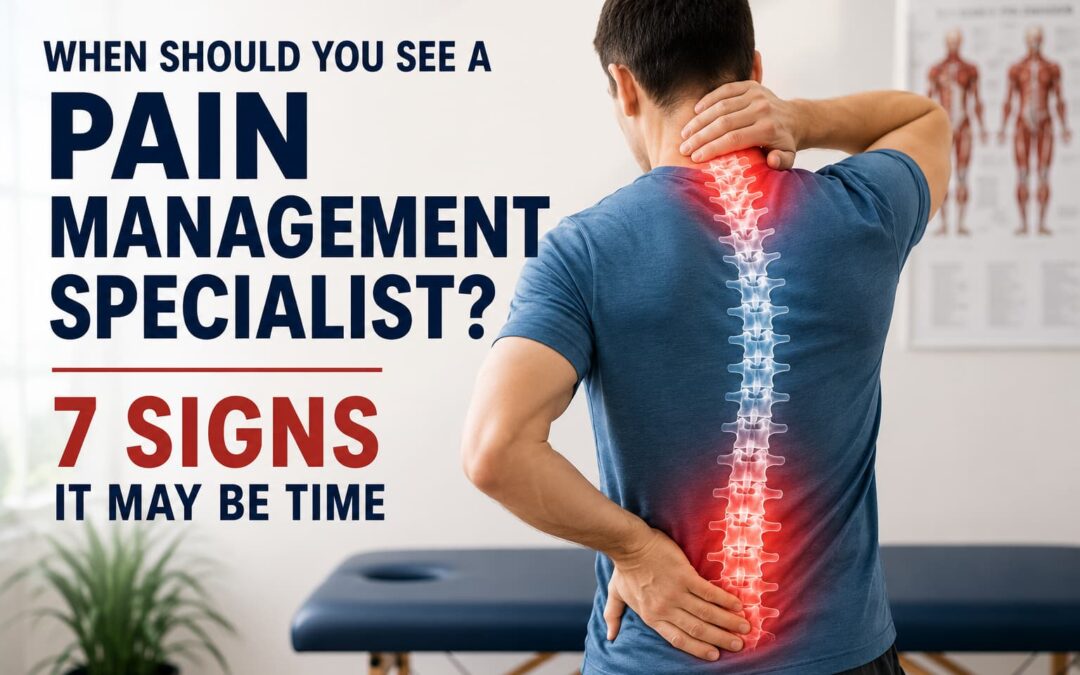
pain management Somerset NJ
Living with pain can affect much more than your physical comfort. Persistent pain can interfere with your ability to work, sleep, exercise, drive, spend time with family, and perform everyday activities.
You should consider seeing a pain management specialist when pain persists, repeatedly returns, limits your daily activities, disrupts sleep or mobility, or hasn’t improved with initial treatment. Information from the National Institute of Neurological Disorders and Stroke (NINDS) highlights the broader impact pain can have, making appropriate evaluation an important consideration for people experiencing persistent symptoms.
A pain management evaluation in Somerset, NJ can help determine potential causes or contributing factors and identify treatment options based on your symptoms, medical history, and functional needs.
At Peak Wellness Center in Somerset, NJ, the goal of pain management is not simply to ask how badly something hurts. Understanding why you are experiencing pain and how that pain is affecting your life is an important part of developing an appropriate treatment strategy.
What Is Pain Management?
Pain management is a medical approach to evaluating and managing acute, persistent, and chronic pain.
Pain itself is a symptom rather than a diagnosis. It can develop from injuries, musculoskeletal conditions, nerve-related problems, inflammation, surgery, medical conditions, or a combination of factors.
That means two people experiencing pain in the same part of the body may require very different approaches.
For example, two patients may both report lower back pain.
One may primarily experience stiffness and difficulty bending after an injury. Another may experience pain that radiates into the leg along with tingling or numbness.
The location may be similar, but the symptoms—and potentially their causes and treatment needs—can be very different.
This is why proper evaluation matters.
Acute Pain vs. Chronic Pain
Understanding how long pain has been present is an important part of an evaluation.
| Type of Pain | Common Pattern | Examples | When Evaluation May Be Appropriate |
|---|---|---|---|
| Acute Pain | Begins suddenly, often following injury, illness, or surgery | Sprain, strain, post-surgical pain | Severe, unexplained, worsening, or not improving as expected |
| Chronic Pain | Persists beyond the expected healing period or continues for months | Persistent back, neck, or joint pain | Interferes with function, mobility, sleep, work, or quality of life |
| Recurring Pain | Improves but repeatedly returns | Recurring back, neck, or joint discomfort | Episodes become frequent or limit activities |
| Nerve-Related Pain | May include burning, tingling, numbness, or shooting sensations | Certain neuropathic or radiating pain conditions | Symptoms persist, worsen, or include neurological changes |
The duration of your symptoms alone doesn’t determine their cause. Your healthcare provider may also consider the location, severity, pattern, associated symptoms, medical history, and how the pain affects your everyday life.
7 Signs You Should Consider Seeing a Pain Management Specialist
1. Your Pain Isn’t Going Away
Minor aches and some injuries may improve with time.
Persistent pain is different.
Perhaps you initially assumed your back pain came from lifting something incorrectly. You expected it to disappear after several days.
Days became weeks.
Weeks became months.
You’re still modifying how you sit, stand, sleep, or work because of the discomfort.
Pain that isn’t improving as expected deserves attention.
Rather than continually managing symptoms without understanding why they persist, a professional evaluation can help determine whether additional assessment or a different treatment approach may be appropriate.
2. Pain Is Interfering With Your Everyday Activities
One of the most important questions about pain isn’t:
“What number is your pain from 1 to 10?”
It’s:
“What is your pain preventing you from doing?”
Pain may become particularly significant when it begins affecting your ability to:
- Walk comfortably
- Sit for extended periods
- Stand
- Work
- Exercise
- Drive
- Climb stairs
- Lift objects
- Perform household activities
- Participate in hobbies
- Spend time with family
- Sleep comfortably
These functional limitations provide valuable information about how significantly pain is affecting your life.
Reducing pain is important, but improving function can be just as important.
3. Your Pain Keeps Coming Back
Some people don’t experience pain continuously.
Instead, they experience a frustrating cycle:
Pain → improvement → return to activity → pain returns.
The temporary absence of pain doesn’t necessarily mean the underlying problem has been resolved.
Recurring symptoms may deserve further evaluation, particularly when episodes become more frequent, severe, or disruptive.
Try keeping track of:
- When your pain occurs
- What activity preceded it
- Where you feel it
- How long it lasts
- What makes it worse
- What makes it better
- Whether it travels to another area
- Whether you experience numbness, tingling, weakness, or other symptoms
Recognizing patterns can provide useful information during your medical evaluation.
4. Pain Is Affecting Your Sleep
Pain and sleep can become closely connected.
Persistent discomfort can make it difficult to find a comfortable position, fall asleep, stay asleep, or feel rested the following morning.
If this happens regularly, tell your provider.
Instead of simply saying:
“My back hurts.”
A more useful description would be:
“My back pain wakes me up several times each night, especially when I turn onto my right side.”
Details like these help your healthcare provider better understand how your symptoms behave and how significantly they affect you.
5. You’ve Tried Other Treatments Without Enough Improvement
Many people consider pain management after trying other approaches.
Depending on the condition, previous treatments might include:
- Activity modification
- Physical therapy
- Exercise
- Heat or cold
- Over-the-counter medications
- Prescription medications
- Previous injections or procedures
- Other conservative treatments
If something hasn’t worked, that information matters.
Your provider may want to know:
What did you try?
How long did you try it?
Did it provide any relief?
How much did it help?
How long did the improvement last?
Treatment history can provide important clues when determining what should happen next.
6. You’ve Started Changing Your Life Because of Pain
This can happen gradually.
You stop exercising because your knee hurts.
You avoid stairs because of your hip.
You stop playing golf because rotating your back is uncomfortable.
You avoid long drives.
You decline activities that require significant walking.
You stop picking up your grandchildren.
Eventually, those changes can begin to feel normal.
But when pain starts determining what you can and cannot do, it may be time for a professional evaluation.
Pain management should consider quality of life—not just pain intensity.
7. You Still Don’t Know Why You’re Hurting
Sometimes uncertainty becomes almost as frustrating as the pain itself.
You may be asking:
Why hasn’t this gone away?
Why does the pain keep returning?
Should I still be hurting?
Why did my previous treatment only help temporarily?
Should I exercise or rest?
Should I consider physical therapy?
Do I need another type of treatment?
A pain management evaluation gives you an opportunity to discuss these questions with a healthcare professional and review your symptoms, history, previous treatments, and available options.
What Happens During a Pain Management Evaluation?
A comprehensive pain evaluation involves much more than assigning your symptoms a number.
Your provider may evaluate several areas.
Your Symptoms
Be prepared to describe your pain.
Where does it hurt?
When did it begin?
Was there an injury?
Is it constant or intermittent?
Does it travel?
What makes it worse?
What makes it better?
Words such as aching, burning, stabbing, shooting, throbbing, tingling, or pressure can help your provider better understand what you’re experiencing.
Your Medical History
Your healthcare provider may review:
- Previous injuries
- Surgeries
- Existing medical conditions
- Current medications
- Previous diagnoses
- Previous treatments
- Relevant imaging or testing
This information helps create a more complete picture of your health.
How Pain Affects Your Function
Don’t overlook this part of the conversation.
Tell your provider if pain prevents you from:
- Working normally
- Walking
- Exercising
- Sleeping
- Driving
- Sitting
- Standing
- Lifting
- Performing household activities
The effect pain has on your life can be just as important as its intensity.
What Conditions May Benefit From Pain Management?
Depending on the underlying diagnosis and individual circumstances, pain management may be considered for symptoms involving areas such as:
- Lower back
- Neck
- Shoulders
- Hips
- Knees
- Joints
- Muscles
- Nerves
- Persistent pain following certain injuries
- Chronic musculoskeletal pain
However, having pain in one of these areas doesn’t automatically determine the treatment you need.
Pain is a symptom. The goal is to understand what may be contributing to it.
Pain Management vs. Physical Therapy: Which Is Better?
This is one of the most common questions people with persistent pain ask.
The better question is:
Which approach is appropriate for your particular problem?
Physical therapy commonly focuses on:
- Mobility
- Strength
- Flexibility
- Balance
- Movement
- Physical function
- Returning to normal activities
Pain management may focus on:
- Evaluating persistent or complex pain
- Identifying possible sources of pain
- Medical management
- Appropriate medications when indicated
- Procedures or interventions when appropriate
- Improving function and quality of life
These approaches aren’t necessarily competitors.
Depending on the diagnosis and individual circumstances, physical therapy and pain management may sometimes complement each other.
For example, reducing pain may help someone participate more effectively in physical therapy, while physical therapy may address strength, mobility, or functional limitations associated with the condition.
At Peak Wellness Center, having access to different wellness and rehabilitation services can help create opportunities for coordinated care when clinically appropriate.
What Is the Goal of Pain Management?
Patients naturally want their pain to disappear.
But eliminating all pain isn’t always a realistic outcome for every chronic condition.
Treatment goals may therefore include:
- Reducing pain
- Improving movement
- Increasing walking tolerance
- Sleeping better
- Returning to work
- Exercising more comfortably
- Performing household activities
- Returning to hobbies
- Reducing painful episodes
- Improving overall quality of life
This is why treatment progress shouldn’t be judged exclusively by a pain scale.
Imagine someone whose pain changes from 8/10 to 5/10.
That’s useful information.
But now imagine that same person can also walk for 30 minutes instead of five, sleep most of the night, and return to work.
Those functional changes provide a much clearer picture of meaningful improvement.
Don’t Just Track Your Pain—Track Your Function
If you’re preparing for a pain management appointment, keeping a simple pain journal can be helpful.
| What to Track | Example |
|---|---|
| Pain Location | Lower back |
| Pain Intensity | 6/10 |
| Trigger | Sitting longer than 30 minutes |
| Duration | Approximately 2 hours |
| Other Symptoms | Tingling in right leg |
| What Helps | Walking or changing position |
| Sleep Impact | Wakes me twice per night |
| Functional Limitation | Difficulty sitting through work meetings |
Instead of relying entirely on memory during your appointment, you’ll have specific information to discuss with your provider.
When Pain Requires Immediate Medical Attention
Not every painful condition should wait for a routine pain management appointment.
Seek prompt or emergency medical attention for severe, sudden, or rapidly worsening symptoms that could represent a medical emergency.
Examples can include pain accompanied by:
- Chest pain or pressure
- Difficulty breathing
- Sudden severe headache
- Significant new weakness or paralysis
- Loss of consciousness
- Sudden confusion
- Severe trauma
- New loss of bladder or bowel control associated with significant back or neurological symptoms
- Sudden or rapidly worsening neurological symptoms
If you’re uncertain whether your symptoms could represent an emergency, seek immediate medical evaluation rather than waiting for a routine appointment.
10 Questions to Ask Your Pain Management Provider
Going into your appointment prepared can help you better understand your options.
- What could be causing my pain?
- Do I need additional testing?
- What treatment options are available?
- Why are you recommending this particular treatment?
- What are the potential benefits and risks?
- Are there alternatives?
- Could physical therapy help?
- What activities should I continue or modify?
- How will we measure whether treatment is working?
- When should my treatment plan be reassessed?
You should understand not only what treatment is being recommended but also why it may be appropriate for you.
Frequently Asked Questions About Pain Management
When should I see a pain management specialist?
Consider a pain management evaluation when pain persists, repeatedly returns, hasn’t improved with initial treatment, or begins interfering with sleep, mobility, work, exercise, or everyday activities.
How long should I wait before seeing a pain specialist?
There is no single timeline appropriate for everyone. The severity, duration, cause, associated symptoms, medical history, and effect on daily function should all be considered. Severe or concerning symptoms may require immediate medical attention.
Can a pain management specialist help with back pain?
Pain management may be appropriate for some people experiencing persistent back pain. The right treatment depends on the cause of the pain, symptoms, medical history, functional limitations, and previous treatment response.
Is pain management just medication?
No. Depending on the condition and provider’s scope of practice, pain management can involve different approaches, including medical evaluation, medication when appropriate, rehabilitation, procedures, lifestyle strategies, referrals, or coordinated care.
Can I receive physical therapy and pain management at the same time?
In appropriate cases, yes. Physical therapy and pain management can sometimes complement one another. Your healthcare providers can determine whether combining approaches is appropriate for your particular condition.
What should I bring to my first pain management appointment?
Bring an updated medication list, relevant medical records or imaging if available, information about previous treatments, and notes describing when your pain occurs and how it affects your everyday activities.
What should I tell my pain management provider?
Be specific. Explain where you experience pain, when it started, what makes it better or worse, whether it travels, what treatments you’ve already tried, and what activities you can no longer perform comfortably.
Pain Management in Somerset, NJ
Living with persistent pain doesn’t mean you should simply continue adjusting your life around it.
If pain is preventing you from sleeping comfortably, working normally, exercising, walking, or enjoying everyday activities, a professional evaluation can help you better understand your symptoms and available treatment options.
At Peak Wellness Center in Somerset, New Jersey, we take an individualized approach to pain management. Your symptoms, medical history, previous treatments, functional limitations, and personal goals are considered when determining an appropriate path forward.
If your pain isn’t improving or is beginning to interfere with your quality of life, contact Peak Wellness Center to schedule a consultation.
Contact Peak Wellness Center
Peak Wellness Center
220 Davidson Ave
Suite 128
Somerset, NJ 08873
Phone: (732) 633-7277
Email: info@peakwellnessnj.com
Website: peakwellnessnj.com
Medical Disclaimer
This article is provided for general educational purposes only and does not constitute medical advice, diagnosis, or treatment. Symptoms, diagnoses, treatment eligibility, risks, and results vary by individual. Always consult an appropriately licensed healthcare professional regarding persistent pain or before beginning or changing a treatment plan. Seek immediate medical attention for symptoms that may represent a medical emergency.