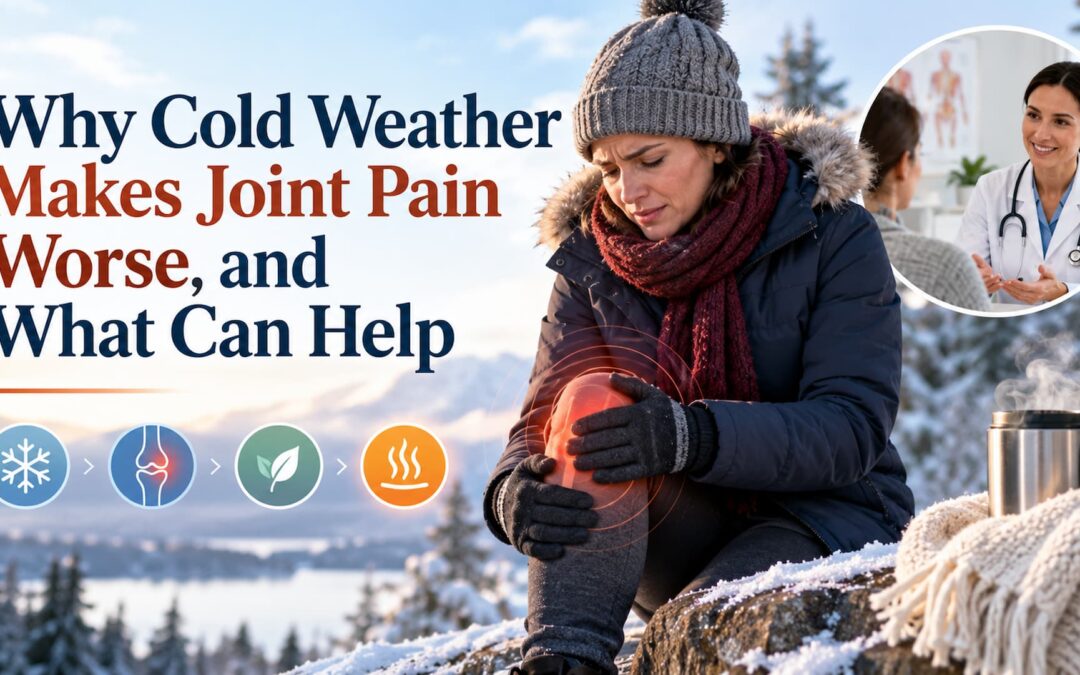
If your knees, hips or hands start aching as soon as the temperature drops, you are not imagining it. Many people with arthritis or old injuries notice that joint pain in cold weather feels worse than it does in summer. Cold weather does not cause arthritis, but it can make existing aches more noticeable. The National Institute of Arthritis and Musculoskeletal and Skin Diseases (NIAMS) provides reliable information about arthritis, joint health, and ways to manage related symptoms. Here is what may be happening and what you can do about it this winter.
Why Joints Can Hurt More When It’s Cold
Researchers are still studying exactly how weather affects joint pain, and not every study agrees. These are the explanations doctors point to most often.
Joint fluid gets thicker
Your joints are cushioned by synovial fluid. Rheumatologist Dr. Mariko Ishimori of Cedars-Sinai compares it to motor oil and explains that in cooler weather it can become thicker, so joints feel stiffer and less smooth.
Changes in barometric pressure
Before a storm or cold front, air pressure drops. One theory is that the tissues around a joint expand slightly when pressure falls, which can irritate a joint that is already inflamed or crowded.
Less circulation and more muscle tension
Cold weather can slow circulation to the hands and feet and make muscles tense up. Tight muscles pull on the joints they support, which can increase stiffness.
We move less in winter
Shorter days and icy sidewalks keep many people indoors. Less movement means stiffer joints and weaker supporting muscles, which can make pain worse over time.
Who Feels It Most
- People with osteoarthritis or rheumatoid arthritis
- Anyone with an old injury, such as a knee or shoulder injury from sports or work
- People who have had joint surgery
- Adults who carry extra weight, which puts more pressure on knees and hips
- People who sit for long periods at work
Ways to Ease Joint Pain This Winter
Stay warm, especially in the morning
Dress in layers, keep hands and knees covered outdoors and consider a heating pad or a warm shower to loosen stiff joints before starting the day.
Keep moving, indoors if you have to
Regular movement is one of the most useful things you can do for arthritis pain. Walking at the mall, a stationary bike, swimming in an indoor pool or gentle strength exercises all count. Start slowly and talk to your doctor before beginning a new routine if you have been inactive.
Warm up before shoveling or outdoor activity
A few minutes of gentle movement for your wrists, shoulders, hips and knees prepares your joints for work. Push snow instead of lifting it when you can.
Protect yourself from falls
Wear shoes with good grip, use handrails and take your time on icy surfaces. A fall can turn a sore joint into an injury.
Support a healthy weight
Every extra pound adds pressure on weight-bearing joints like the knees and hips. If weight is part of the problem, a supervised medical weight loss program can help you make a plan.
Ask about vitamin D
Many people have low vitamin D in winter. Your doctor can check your levels and tell you whether a supplement makes sense for you.
Treatments That May Help Winter Joint Pain
When home care is not enough, a care team can look at what is causing your pain and build a plan around it. At Peak Wellness Center in Somerset, options may include:
- Physical therapy to improve strength, flexibility and how your joints move. Learn more about physical and occupational therapy in Somerset.
- Acupuncture, which some patients use alongside other care for pain relief. See our page on acupuncture treatment.
- Pain management support for pain that limits your daily activities. Read about pain management in Somerset, NJ.
- Massage therapy to relax tight muscles around sore joints.
Every patient is different. The right treatment depends on your diagnosis, your health history and your goals, and your provider will discuss options with you after an evaluation.
When to See a Professional
Make an appointment if:
- Joint pain lasts more than a few weeks or keeps getting worse
- A joint is swollen, red or warm to the touch
- Stiffness lasts a long time every morning
- Pain keeps you from sleeping, working or doing everyday tasks
Seek urgent care right away for sudden severe joint pain with fever, or a joint injury that leaves you unable to bear weight. If back pain is part of the picture, read back pain that won’t go away.
Frequently Asked Questions
Can cold weather really make joint pain worse?
Many people report more joint pain in cold or damp weather. Possible reasons include thicker joint fluid, pressure changes and less activity in winter, although research results vary.
Is heat or ice better for stiff joints in winter?
Heat usually helps with stiffness by relaxing muscles and improving blood flow. Ice is more often used for swelling after an injury. Ask your provider what is right for your condition.
Does cold weather cause arthritis?
No. Cold weather does not cause arthritis, but it can make existing symptoms feel worse.
Can physical therapy help with joint pain in winter?
Physical therapy can improve strength, flexibility and joint movement, which may reduce stiffness and pain. A therapist designs exercises for your specific condition.
Get Help for Joint Pain in Somerset, NJ
If cold weather has your joints aching, the team at Peak Wellness Center can help you find the cause and build a plan to keep you moving this winter.
Call Peak Wellness Center at (732) 633-7277 or visit us at 220 Davidson Ave, Suite 128, Somerset, NJ 08873.